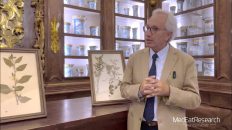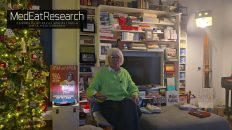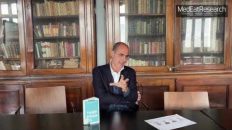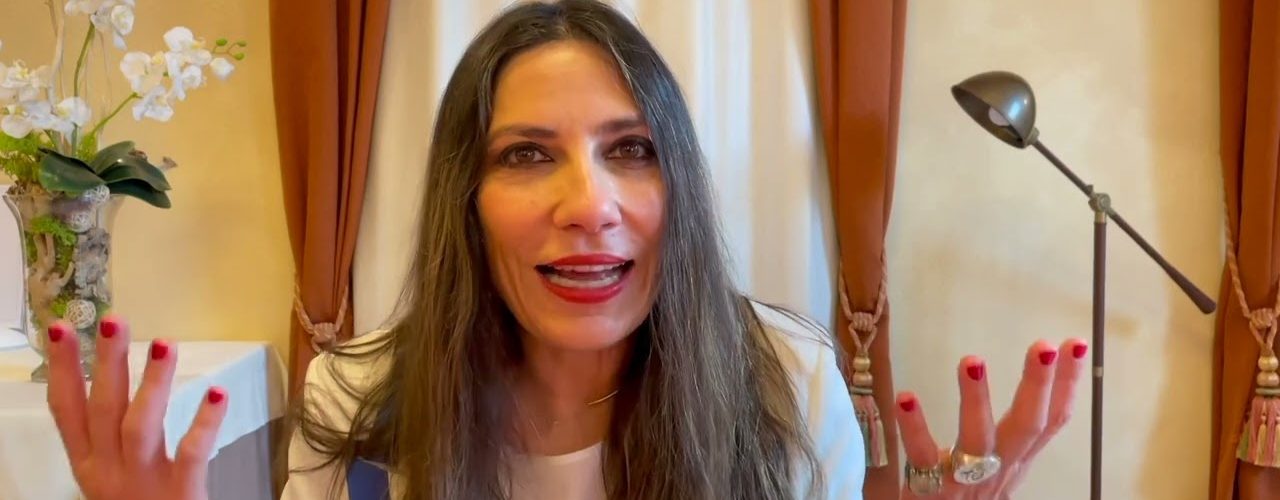
Eliana Liotta is a journalist, science populariser and university lecturer. She is a Mediterranean woman, born in Syracuse to parents from Messina and claims her Sicilian roots.
Her relationship with food is both emotional and professional, ever since she began working in the life sciences, directing an editorial series for Sonzogno dedicated to these subjects.
In his book The Food That Will Save Us, he discusses the relationship between our health and that of the environment, highlighting how the food that is good for our bodies is also the food that respects the Planet, and how one of the main diets with these characteristics is precisely the Mediterranean diet, an ancient way of eating that balances carbohydrates, fats and proteins in the right proportions. The important thing is to distinguish the good carbohydrates such as pasta from the bad ones, i.e. those sugars that are not locked inside food, such as those in snacks and biscuits, which remain free to run around in our bodies once we have eaten them. Don’t go overboard with sweets but don’t give up a nice slice of cake on Sundays because food is not only made up of molecules but above all of conviviality, as long as the exception to the rule does not become the rule because, while it is true that our primordial instinct would lead us to gorge ourselves on anything, it is also true that our ancestors alternated between great binges of food and long periods of fasting and this allowed their organisms to regain balance. It is therefore up to us to regulate our calories in order to prolong our lives, not according to strict restrictions but according to the principle of common sense which suggests that we should do lean days as our religious tradition once dictated.
Among the books written and edited by Eliana Liotta are bestsellers such as La dieta smart food, which shows us the beneficial effects of anthocyanins on our DNA, i.e. those pigments contained in certain smart foods such as cherries, radicchio and strawberries, which act as essential nutrients for the activity of our genes, and Il talento del cervello (The talent of the brain), written by Michela Matteoli, in which the CNR neuroscientist explains how the brain is incredibly malleable and how working on the enrichment of our neurons, including through food, lifestyle and good company, can reduce ageing and chronic inflammation in the body.
Eliana’s madeleine is the tomato sauce passata that her grandmother used to make, a recipe from the Pirandello family, which she inherited like the one for arancine, and which she still prepares in the same way for her children and her husband with tomatoes of three or four different types and a pinch of sugar. She loves the sweet and sour taste and slow cooking natural ingredients such as pulses and vegetables according to old recipes. She appreciates the jump and saffron rice typical of the city where she lives, Milan, but also the Valtellina sciatt and polenta taragna that she eats when she is at her home on Lake Como. His forthcoming book Life is Not a Race is dedicated to the importance of pauses and empty-nesters that allow us to recover our relationship with ourselves, because in life as in music without pauses there is only a bustle of sounds.
Interiew by: Elisabetta Moro
Video by: Elisabetta Moro
Video Editing by: Antonio Puzzi
Document by: Helga Sanità
Subtitle ita/eng by: Antonio Puzzi
Translation by:
MedEatResarch – Center of Social Research on the Mediterranean Diet of the University of Naples Suor Orsola Benincasa, head by Marino Niola and Elisabetta Moro
Realized: 27 maggio 2023